1 hr 30 min
Vancouver Coastal & Seal Colony Boat Adventure
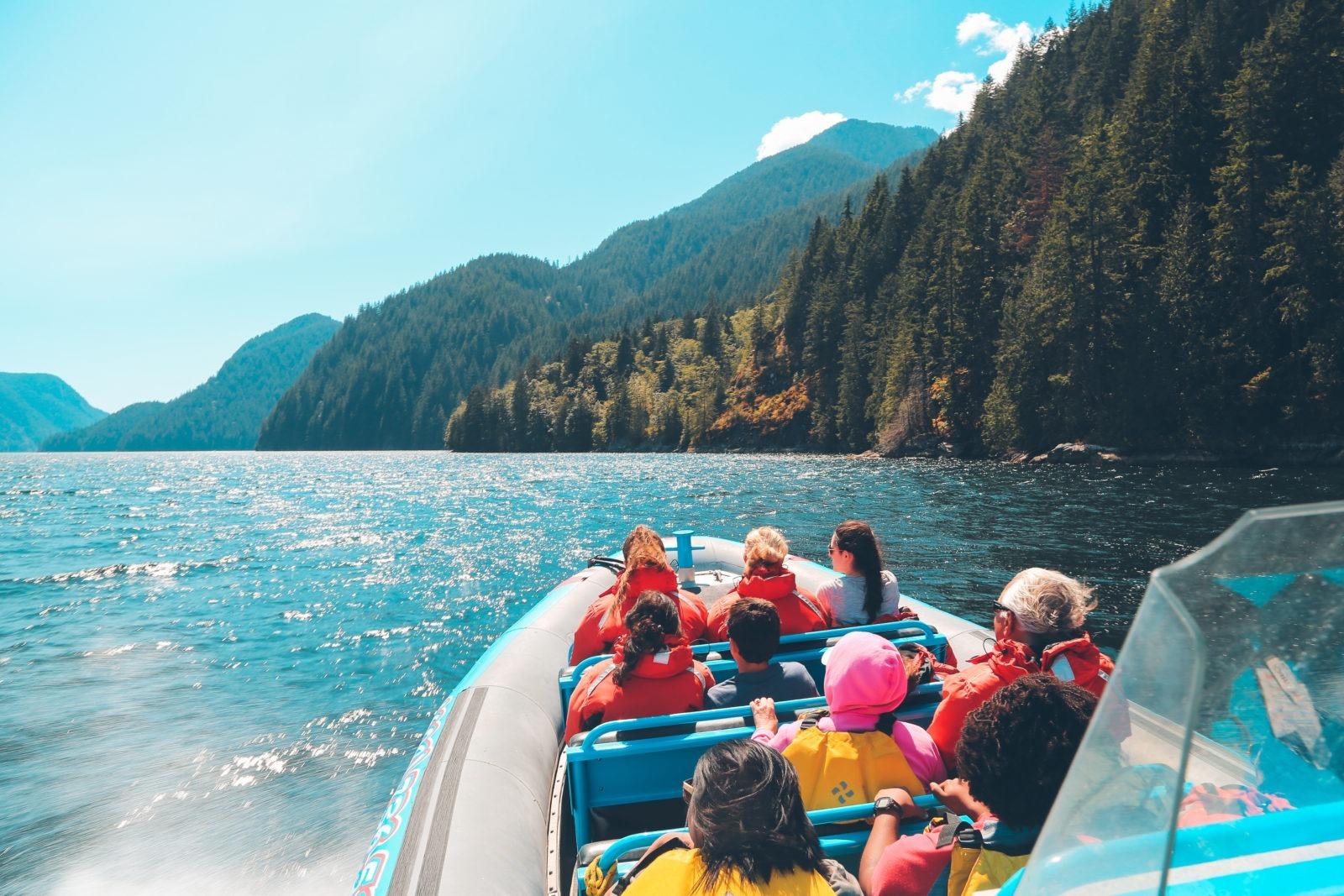
Glide past Stanley Park, under Lions Gate Bridge, and meet harbor seals on this coastal circuit.
Reserve
Hand-picked by our editors — only the best 5 experiences from 12 reviewed.
Verified partners for every tour, free cancellation where available, and instant confirmation on every booking.
1 hr 30 min
Glide past Stanley Park, under Lions Gate Bridge, and meet harbor seals on this coastal circuit.
Reserve
1 hr 30 min
Speed across Burrard Inlet on an open-air boat, spotting wildlife and taking in the city skyline
Reserve
3 hr
Speed through Vancouver's harbor to a glacial fjord, passing iconic landmarks and cascading waterfalls
ReservePrices from verified partners. Availability updates in real time at checkout. Free cancellation policies apply where shown.
The landmarks, rooms, and views travelers on this tour remember — all visible on a single visit.
A striking 150-foot waterfall cascading directly into the fjord. It is accessible only by boat and remains a primary highlight for local explorers.
A small island known for its diverse bird population and pristine coastal trees. This area is a key stop for photographers capturing the inlet's ecology.
A provincial park that protects the unique heritage and environment of the fjord. It preserves sacred sites and natural landmarks essential to local Indigenous history.
Two forested islands situated at the entrance of the inlet that serve as a habitat for local sea lions. These islands offer dramatic views of the surrounding mountainous terrain.
They complement each other; visitors seeking a quiet, sheltered glacier-carved inlet choose Indian Arm, while those preferring wide-open vistas and island exploration find Howe Sound more thrilling.
| Feature | Top pick Indian Arm | Howe Sound |
|---|---|---|
Setting |
Narrow glacial inlet | Open fjord with islands |
Primary Wildlife |
Seals and birds | Seals and dolphins |
Accessibility from Vancouver |
Near North Vancouver | Near West Vancouver |
Water Conditions |
Calm protected waters | Open variable conditions |
Typical Duration |
2–4 hours | 3–5 hours |
Primary Vibe |
Serene wilderness escape | Expansive marine adventure |
| See tickets → |
Verdict: If you are comparing indian arm boat cruises tours to Howe Sound, pick the former for a tranquil morning trip or the latter if you want to purchase indian arm boat cruises tickets for a more rugged coastal experience.
Choose your ticket, select your date, and reserve in under two minutes. Secure checkout handled by our verified partner.
Instant confirmation by email, with a mobile voucher you can save offline. No printing, no queuing at a collection desk.
Arrive at the entrance, show your voucher on your phone, and walk in. Most tickets include priority or skip-the-line access.
Practical details for your visit straight from our verified partners — hours, access, rules, and how to get there.
2350 Gallant Ave, North Vancouver, BC
Main launch point for many fjord tours
Take the R2 RapidBus to Phibbs Exchange then transfer to local bus service.
Access via Deep Cove with limited street parking available at peak hours.
Dress in layers as temperatures on Indian Arm boat cruises can be significantly cooler on the water than on land. Windbreakers and waterproof jackets are recommended even during the summer season.
Passengers are generally limited to one small personal bag on indian arm boat cruises tours. Large suitcases or bulky items may not be permitted due to limited space on smaller vessels.
Photography is encouraged on all Indian Arm boat cruises, though drone use is strictly regulated by Transport Canada. Please ensure your equipment is secured during active travel.
While many indian arm boat cruises tickets offer scenic views, vessel accessibility varies significantly. Please verify specific boarding requirements with your chosen operator before booking.
Mobile phone service may be intermittent or unavailable deep within the fjord. Use these tours as an opportunity to enjoy the natural surroundings.
Families frequently enjoy indian arm boat cruises as a safe way to observe marine wildlife. Ensure children are supervised at all times while aboard the boat.
Some operators provide light refreshments on indian arm boat cruises, while others do not. Check your specific booking confirmation to see if you should bring your own water and snacks.
Pets are generally not permitted on commercial indian arm boat cruises. Service animals may be accommodated with advance notice to the tour provider.
Indian Arm boat cruises operate within a delicate marine environment. Always follow the 'leave no trace' principles while exploring these coastal waters.
2350 Gallant Ave, North Vancouver, BC
Main launch point for many fjord tours
Get directionsBest time to go, insider tips, nearby landmarks, and the cancellation fine print — flip through to skim what matters to you.
How crowds, weather, and events shift across the year.
Mild weather brings out active wildlife and blooming coastal flowers.
June through August offers the warmest temperatures for indian arm boat cruises.
Lower crowds and cooler air make for excellent photography conditions.
Limited operations, though snowy peaks create dramatic landscapes.
Small details that turn a good visit into a great one.
Popular indian arm boat cruises can sell out weeks in advance during summer.
Always verify maritime conditions as high winds may delay morning boat tours.
Bring your own optics to spot wildlife perched on the distant fjord cliffs.
Carry your own water as most vessels have limited supply.
Maintain a safe distance to ensure minimal disruption to the local ecosystem.
Even on sunny days the wind chill on the water is significant.
Non-bookable sights within a short walk — free to visit, easy to pair.
A quiet waterfront area ideal for pre-cruise picnics.
A popular hiking trail offering high-elevation fjord vistas.
A central green space located near the primary launch docks.
Flexible, no hidden fees.
Most Indian Arm boat cruises require cancellation at least 48 hours in advance for a full refund. As there is a 0 CAD entrance fee, individual tour operator policies determine all service costs.
Hand-picked options within walking distance — pick a district for vibe, or a specific hotel for convenience.
Convenient access to transit routes leading to the inlet.
Charming options for those looking to stay near the water.
A wide range of high-end hotels near the harbour.
Indian Arm extends 22 kilometres northeast from Vancouver Harbour, a glacial fjord carved during the last ice age when kilometre-thick ice sheets scoured the Coast Mountains into vertical walls. The inlet reaches depths of 210 metres in places, its floor a submerged valley that once carried meltwater from the Garibaldi ice cap. Granite cliffs rise unbroken for 300 metres on either shore, their faces marked by the striations of ice movement that ceased 11,000 years ago. The name itself is a colonial mistranslation—the inlet was historically known as Sḵwimc̓mits by the Tsleil-Waututh Nation, whose seasonal villages lined the shoreline at Belcarra and Silver Falls. Indian Arm remains one of the deepest tidal inlets along the British Columbia coast accessible within an hour of a major city centre. The fjord's north end terminates at Granite Falls, a 60-metre cascade fed by snowmelt from the Indian River watershed. The waterfall flows year-round but peaks in June when late spring runoff reaches maximum volume. Harbour seals haul out on the granite shelves below the falls, their colonies numbering between 40 and 80 individuals depending on the season. Bald eagles nest in the old-growth Douglas fir along the eastern shore, and black bears forage the intertidal zone during low-tide salmon runs in late summer. Indian Arm boat cruises depart from Coal Harbour and Vancouver Harbour terminals, following the same route used by coastal steamships in the early twentieth century when the inlet served as a logging artery. Zodiac-style vessels carry between six and twelve passengers and navigate close to shore, while larger sightseeing cruisers accommodate up to 100 and follow deeper channels. Both vessel types pass beneath the Ironworkers Memorial Second Narrows Bridge, a 335-metre steel truss span that carries the Trans-Canada Highway across Burrard Inlet. The passage through the narrows marks the transition from urban harbour to forested fjord, the Vancouver skyline receding astern as the granite walls close in. The fjord's microclimate shifts perceptibly beyond Belcarra Point. Summer air temperatures can drop 4 to 6 degrees Celsius compared to downtown Vancouver, and morning fog lingers in the inlet until mid-morning when solar warming lifts the marine layer. The water itself remains cold year-round, averaging 9 to 12 degrees Celsius even in August, a legacy of the inlet's depth and limited tidal exchange. These conditions support kelp forests along the subtidal rock faces and cold-water fish species including rockfish and lingcod, which attract both seals and diving birds. The combination of glacial topography, marine wildlife, and proximity to an urban departure point makes Indian Arm one of the most accessible fjord environments in North America.
"The inlet reaches depths of 210 metres in places, its floor a submerged valley that once carried meltwater from the Garibaldi ice cap."
A step-by-step walkthrough of the visit — what you'll see, how long each stage takes, and the details that matter.
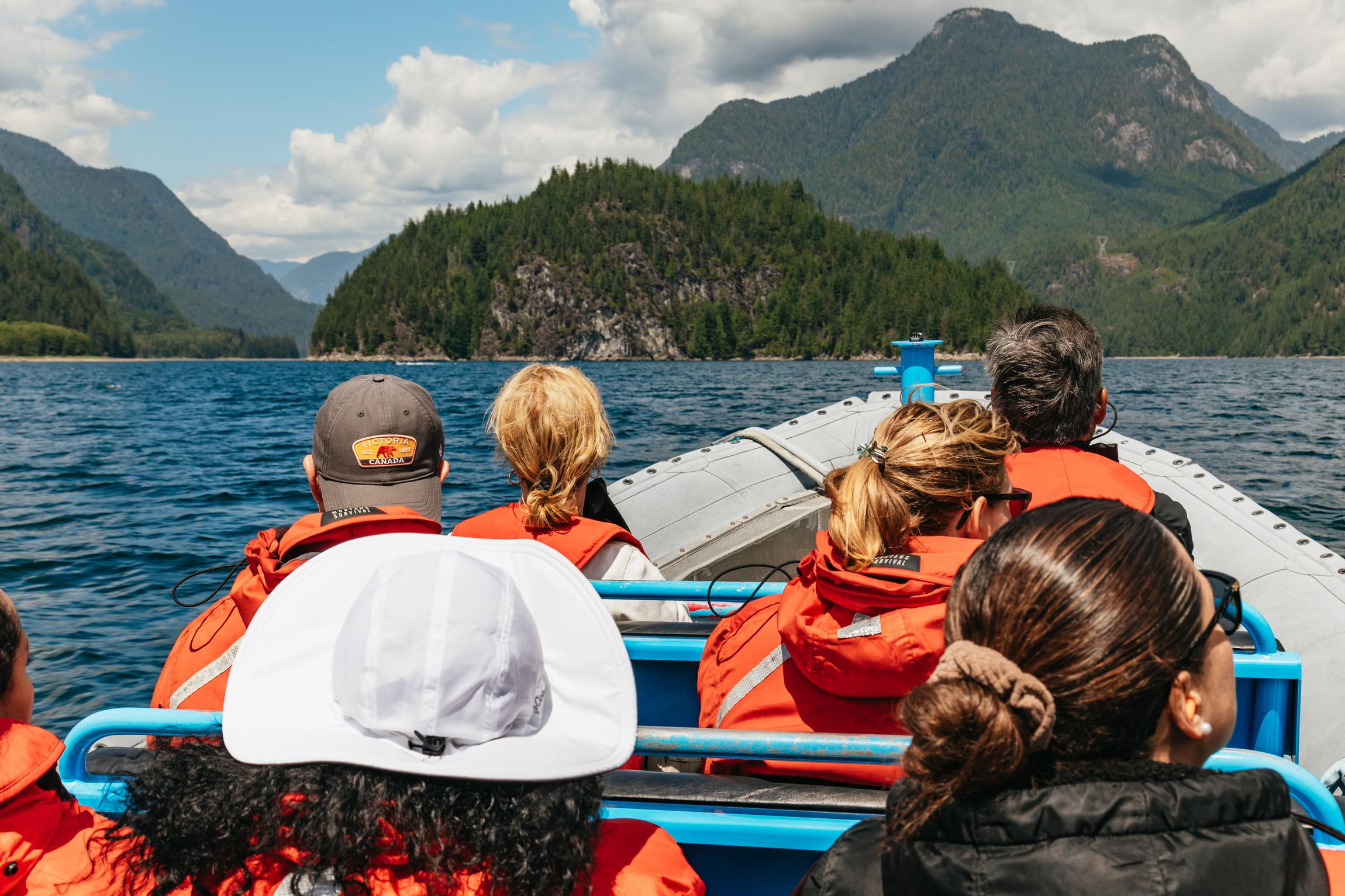
You board at Coal Harbour or Granville Island, stepping onto a rigid-hulled inflatable or an enclosed sightseeing vessel depending on your booking. The Zodiac tour departs at 09:00, seating arranged in staggered rows with handholds along the pontoons. The skipper throttles up past Canada Place, the white sails of the convention centre receding as you approach the Second Narrows Bridge. The passage beneath the steel span takes 30 seconds, the bridge deck 50 metres overhead, and then the fjord opens ahead—vertical granite walls replacing the harbour's container terminals. You move closer to shore as the inlet narrows, the vessel slowing to 15 knots as the skipper scans the waterline for seals. The first haul-out site appears near Racoon Island, a cluster of eight harbour seals on a sloped rock shelf. The captain cuts the engine and you drift 20 metres offshore, the silence broken only by the seals' exhalations. A bald eagle lifts from a snag on the eastern shore, wings spanning two metres as it banks over the water. The cruise continues north for 40 minutes until Granite Falls comes into view, a white thread descending the mountain face. The boat holds position 50 metres from the base of the falls, close enough to feel the mist. You count 14 seals on the granite apron below the cascade, their bodies sleek and motionless. The return journey follows the western shore, passing beneath the cliffs at Indian Arm Provincial Park before re-entering the harbour at 11:30.
Operators typically run between 09:00–17:00, consistent with the Indian Arm operational window.
There is a 0 CAD entrance fee for the area, though individual boat tours carry their own costs.
We recommend the 09:00–12:00 arrival window for the calmest waters and best wildlife viewing.
Accessibility depends on the vessel; check your specific indian arm boat cruises booking for details.
Bring a waterproof jacket, sunglasses, and a camera to enjoy your indian arm boat cruises.
Some operators allow food, but please check your specific indian arm boat cruises tickets for their policy.
You can reach the North Vancouver launch areas via public transit or car.
Yes, families are welcome on most indian arm boat cruises; check the age requirements for specific tours.
Most indian arm boat cruises require cancellation 48 hours in advance for a full refund.
Yes, you can visit Quarry Rock or Deep Cove Park before or after your boat tour.